Condom Size Chart: How to Measure and Find Your Fit
Condom sizes exist for a reason. Men who said theirs fitted badly were over twice as likely to have one break or slip off. How to measure for condom size.

- In a US study of 436 men, 44.7% said the last condom they used didn't fit well.
- Those men were about 2.6 times more likely to have a condom break and 2.7 times more likely to have one slip off.
- Condom fit is mostly about girth, not length. Measure around, then pick "snug", "standard" or "large" to match.
Most men buy condoms the way they buy petrol: grab whatever's there, pay quickly, avoid eye contact. Then they blame condoms for being uncomfortable, ruining the mood, or snapping at the worst possible moment.
The problem often isn't condoms. It's the wrong condom.
What the study found
Researchers at the Kinsey Institute and the University of Kentucky surveyed 436 men about the last time they used a condom. Almost half (44.7%) said it didn't fit well.1 Compared with men whose condoms fitted, they were:
- about 2.6× more likely to report breakage
- about 2.7× more likely to report slippage
- about 2× more likely to say the condom interfered with their erection, and 2.3× more likely to lose it
- more likely to report the condom drying out, and to take it off before sex was over1
Their partners noticed too. Women whose partners had poorly fitting condoms were more likely to have trouble reaching orgasm.1
Does condom size depend on length or girth?
Most condoms are long enough for nearly everyone. The average erect penis is about 13 cm long, and standard condoms are longer than that. What varies more, and matters more for fit, is how wide it is. Average erect girth is about 11.7 cm around.3
How do you find your condom size?
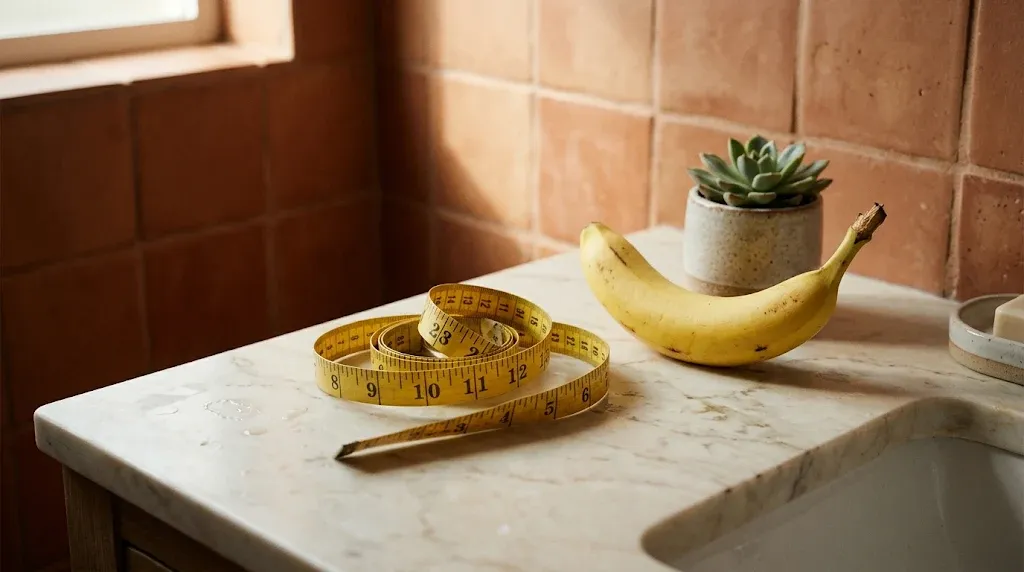
- When erect, wrap a soft tape measure (or a piece of string, then measure the string) around the thickest part of the shaft.
- Compare it with the brand's size chart. Most brands publish the "nominal width", which is the condom laid flat.
- Roughly speaking: if you're well below average girth, try a snug/slim fit. Around average, standard. Well above, large.
- Buy a variety pack and test-drive them solo first. No pressure, no audience.
Other fit and comfort tips
- Thinner condoms can feel better, and they still meet the same safety standards.
- Add lube to the outside to reduce friction and drying. Use water- or silicone-based with latex, never oil.4 See our lube cheat sheet.
- Latex allergy? Try polyisoprene or polyurethane condoms.
- Check the date and keep them out of wallets and hot cars.
- Pinch the tip when you roll it on, to leave room and squeeze out air.
If a condom breaks
Stop, and don't panic. Emergency contraception works best the sooner it's taken. If there's any chance of HIV exposure, ask a clinic or emergency department about PEP within 72 hours, and book an STI test.Quick answers
How common are badly fitting condoms?
In a US study of 436 men, 44.7% said the last condom they used didn't fit well.
Does condom fit affect breakage?
Yes. Men with poorly fitting condoms were about 2.6 times more likely to have one break and 2.7 times more likely to have one slip off.
How do I find my condom size?
Fit is mostly about girth, not length. Measure around the erect penis, then choose snug, standard or large to match.
Sources
- Crosby RA, Yarber WL, Graham CA, Sanders SA. Does it fit okay? Problems with condom use as a function of self-reported poor fit. Sex Transm Infect. 2010. sti.bmj.com
- Crosby R et al. If the condom fits, wear it: a qualitative study of young African-American men. Sex Transm Infect. 2004. pmc.ncbi.nlm.nih.gov/articles/PMC1744878
- Veale D et al. Am I normal? Nomograms for penis length and circumference. BJU Int. 2015. pubmed.ncbi.nlm.nih.gov/25487360
- WHO/UNFPA/FHI360. Use and procurement of additional lubricants for male and female condoms. 2012. iris.who.int
This article is for general education and isn't medical advice. If something's worrying you, a doctor, nurse or pharmacist can look at your situation properly. How we research our articles.