Foods for Erectile Dysfunction: The Fruit Linked to Fewer ED Problems
A study following 25,000 men for ten years found those eating more berries and citrus had fewer erection problems. Foods that help erectile dysfunction.
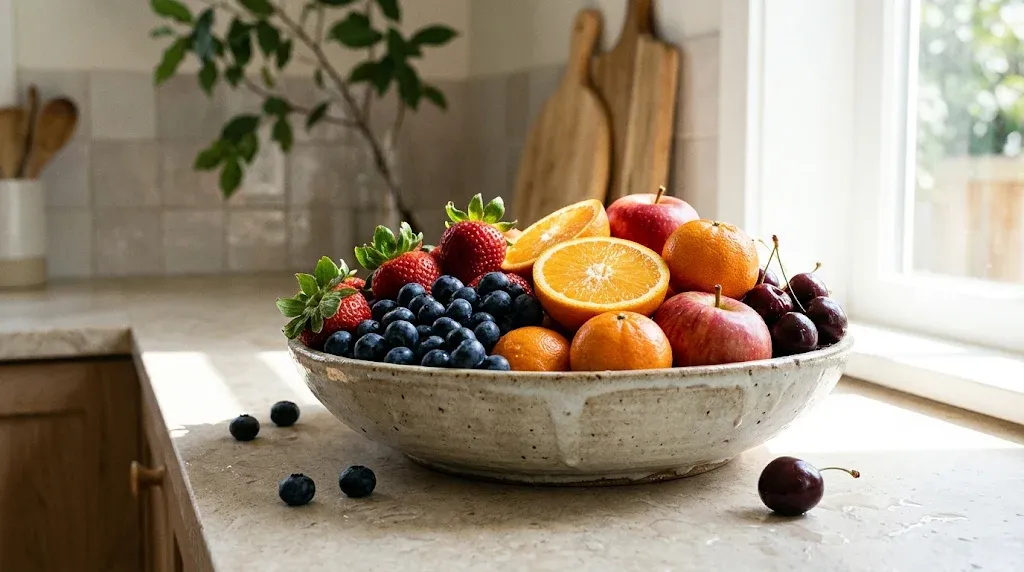
- Men who regularly ate fruits rich in plant compounds called flavonoids had a lower risk of developing erection problems over ten years.
- The stars: blueberries, strawberries, citrus fruit, apples and pears.
- It's a link, not proof, and it won't work like a pill. But it's cheap, tasty and good for your heart too.
We'd love to tell you there's a fruit that works like a little blue pill. There isn't. Anyone selling you a "natural Viagra smoothie" is selling you a smoothie.
But there is some genuinely interesting research suggesting that what's in your fruit bowl might matter for what happens in the bedroom, years down the line.
The study
Researchers at Harvard and the University of East Anglia followed 25,096 men for ten years. Every few years the men filled in detailed food questionnaires and answered questions about their erections. Over the decade, about a third of them developed erection problems.1
The team then looked at flavonoids. These are natural plant chemicals that give fruit much of its color, and they're known to help keep blood vessels flexible. Men who ate more of three particular types of flavonoid had a noticeably lower risk of developing erection problems, even after the researchers accounted for things like smoking, weight, exercise and blood pressure.1
In plain numbers, men eating at least three portions of these foods a week were about 10% less likely to develop ED.2 Not life-changing on its own. But for something you can buy at the supermarket, not bad at all.
Why would fruit help erections?
Erections are about blood flow. Flavonoids seem to help the inner lining of blood vessels work properly and stay relaxed, which is exactly what an erection needs. And because the penis has some of the smallest arteries in the body, it tends to show blood vessel problems before the heart does.3 What's good for one is usually good for the other.
Which fruits are best for erections?
| Food | Why it made the list |
|---|---|
| Blueberries | Packed with anthocyanins, the pigments that make them blue |
| Strawberries | One of the top flavonoid sources in the study |
| Oranges, grapefruit, lemons | Rich in flavanones, another type linked to lower risk |
| Apples and pears | Everyday, cheap and in the study's top five |
| Cherries, blackberries, grapes | Similar deep-coloured pigments |
Red wine also showed up as a flavonoid source in the study. We are not going to tell you to drink more red wine, because alcohol does its own damage to sexual performance. Have the grapes instead.
Keep expectations real
- This was an observational study. It shows a link, not that fruit caused the difference. Men who eat lots of fruit may do other healthy things too, although the researchers tried to adjust for that.
- It's about prevention over years, not a fix for tonight.
- If you already have ED, fruit won't replace a proper check-up. Erection problems can be an early sign of heart and blood vessel trouble, and that's worth knowing about.
Easy wins
Throw frozen berries into your breakfast. Keep a bowl of apples or mandarins where you can see them. Swap the afternoon cookie for a handful of grapes. Small, boring, repeatable. That's how habits work.Quick answers
Can eating fruit help erections?
Men who regularly ate flavonoid-rich fruits had a lower risk of developing erection problems over ten years. It's a link, not proof.
Which fruits are linked to fewer erection problems?
Blueberries, strawberries, citrus fruit, apples and pears were the standouts.
Do flavonoid foods work like Viagra?
No. They won't work like a pill, but they're cheap, tasty and good for your heart too.
Sources
- Cassidy A, Franz M, Rimm EB. Dietary flavonoid intake and incidence of erectile dysfunction. Am J Clin Nutr. 2016. pmc.ncbi.nlm.nih.gov/articles/PMC4733263
- Harvard Health Publishing. Flavonoids associated with better erectile function. health.harvard.edu
- Montorsi P et al. The artery size hypothesis. Am J Cardiol. 2005. pubmed.ncbi.nlm.nih.gov/16387561
This article is for general education and isn't medical advice. If something's worrying you, a doctor, nurse or pharmacist can look at your situation properly. How we research our articles.